
Postgraduate students, are you guys having difficulties with your research writing?
We know firsthand how challenging it can be. From finding the right references to drafting a perfect paper, it’s a long and exhausting process.
But what if artificial intelligence (AI) tools could make it easier?
The good news is that they can!
Here are 7 fantastic AI tools that can simplify your research journey and make your writing process faster, more efficient, and less stressful!
1. SciSpace (Link)
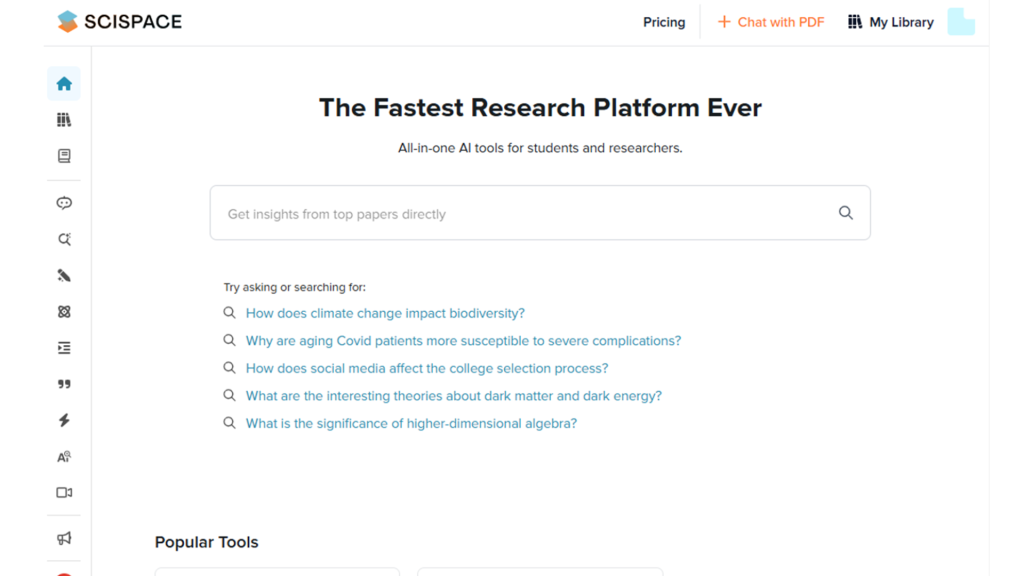
Feeling exhausted from juggling multiple tools for manuscript writing, editing, and submission?
SciSpace is your one-stop solution. Also known as Typeset.io, this AI-powered platform supports researchers in:
- Understanding complex scientific literature.
- Collaborating with peers.
- Writing and formatting research papers.
One of its standout features is its ability to format your manuscript according to the guidelines of over 40,000 journals, saving you time and avoiding reformatting hassles.
With SciSpace, publishing becomes a breeze, as it also assists with peer review and submission processes.
Why it’s useful: Saves time by streamlining the entire publishing workflow, helping you focus on your research.
2. Consensus (Link)
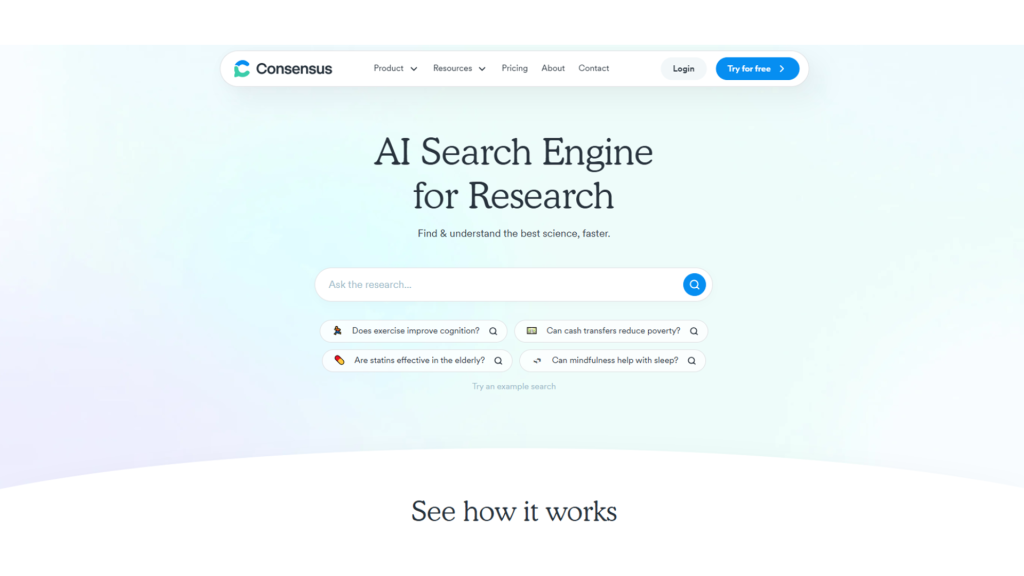
Finding the right research papers for your study can take hours if not days; Consensus simplifies this process.
It’s an AI-powered search engine that goes beyond keywords, using machine learning to understand your research questions and provides insights from academic papers that match your query.
Another great feature?
It summarizes the main points of each paper, so you don’t have to read the entire thing unless you need to. This is a huge time-saver, especially when you’re exploring new topics.
Why it’s useful: Look for relevant papers and give summaries, saving you from sifting through hundreds of articles.
3. Connected Papers (Link)
Struggling to find related studies for your literature review?
Connected Papers can help you.
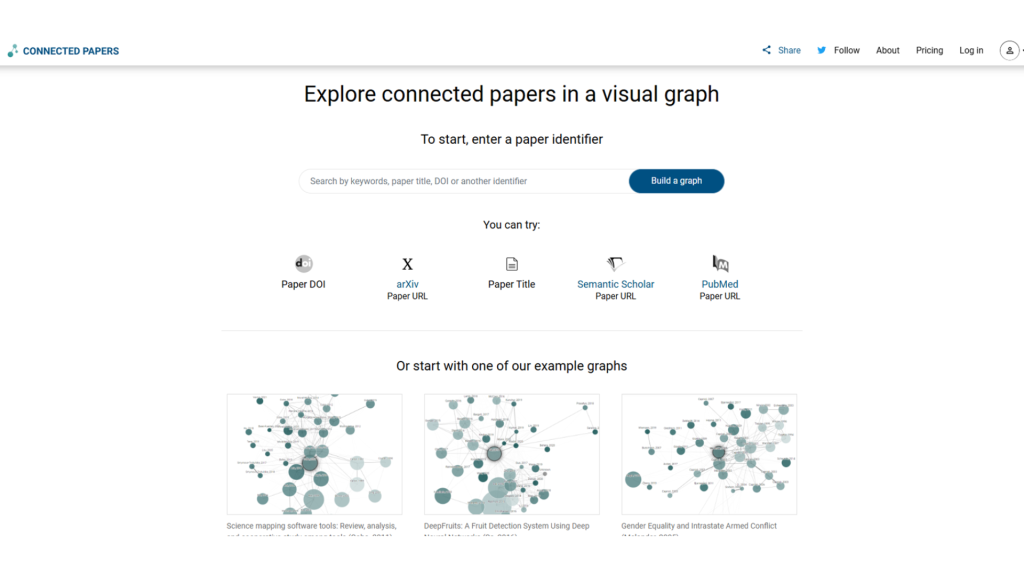
It’s a visual tool that maps out academic papers related to your topic. Simply input a paper or keyword, and it generates a graph of related works.
This tool is excellent for understanding the broader context of your field and identifying influential papers or recent trends.
Why it’s useful: Visualizes connections between papers, making it easier to explore your research field.
4. Semantic Scholar (Link)
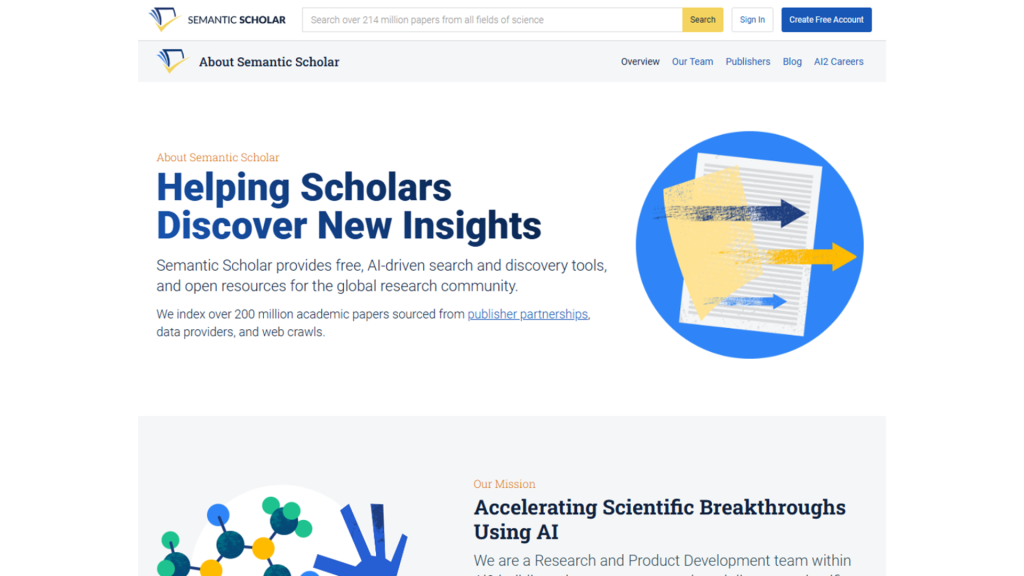
Semantic Scholar is a free AI research tool that provides access to over 200 million academic papers.
Unlike regular search engines, it uses AI to understand the content of each paper, ensuring more accurate and relevant search results.
It also offers features like:
- Citation analysis to see how often a paper has been referenced.
- Highlighted key points in papers for quick understanding.
- Alerts for new papers in your field.
Why it’s useful: A powerful, free tool for finding, analyzing, and keeping up with academic papers.
5. ClioVis (Link)
Research writing isn’t just about finding papers; it’s also about organizing your findings.
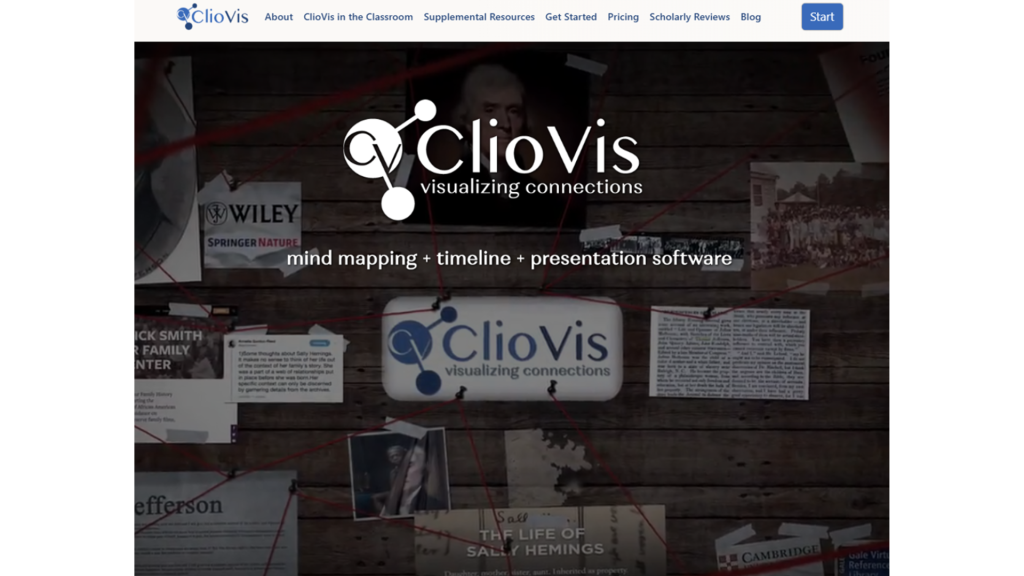
ClioVis is a visualization tool that helps you categorize and connect different papers.
You can use it to:
- Create timelines for your research project.
- Organize citations effectively.
- Build visual presentations of your research.
This tool is particularly helpful for group projects or when you need to present your findings visually.
Why it’s useful: Keeps your research organized and helps you create clear, professional presentations.
6. Jenni (Link)
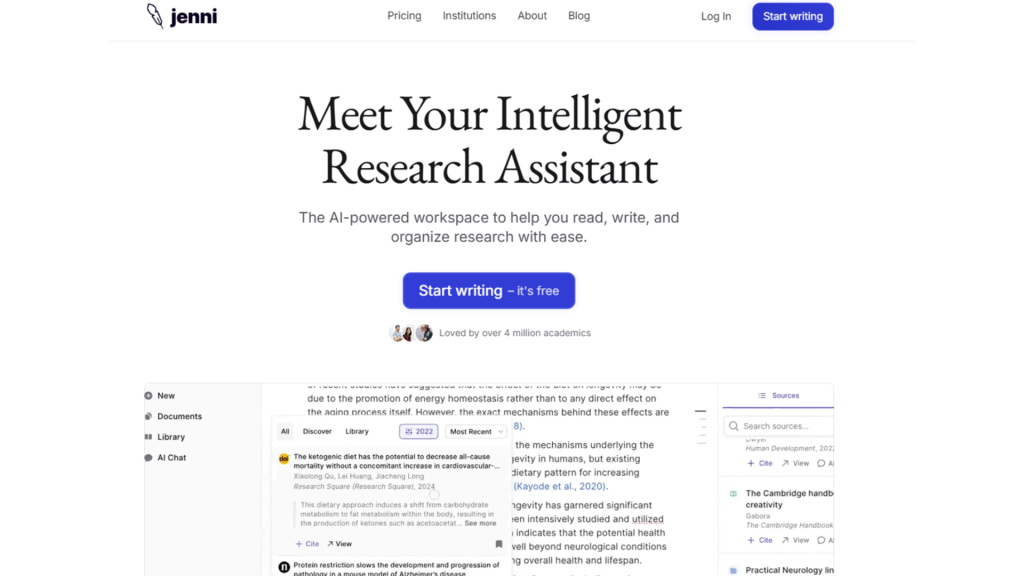
Writing a research paper can be overwhelming, but Jenni is like a co-writer who helps you along the way.
This AI writing assistant provides suggestions as you write, helping you with:
- Sentence structure.
- Academic tone.
- Generating ideas for your paper.
Jenni can also help you spot errors and improve clarity, making your paper more polished and professional.
Why it’s useful: A handy assistant for improving your writing and staying productive.
7. ChatPDF (Link)
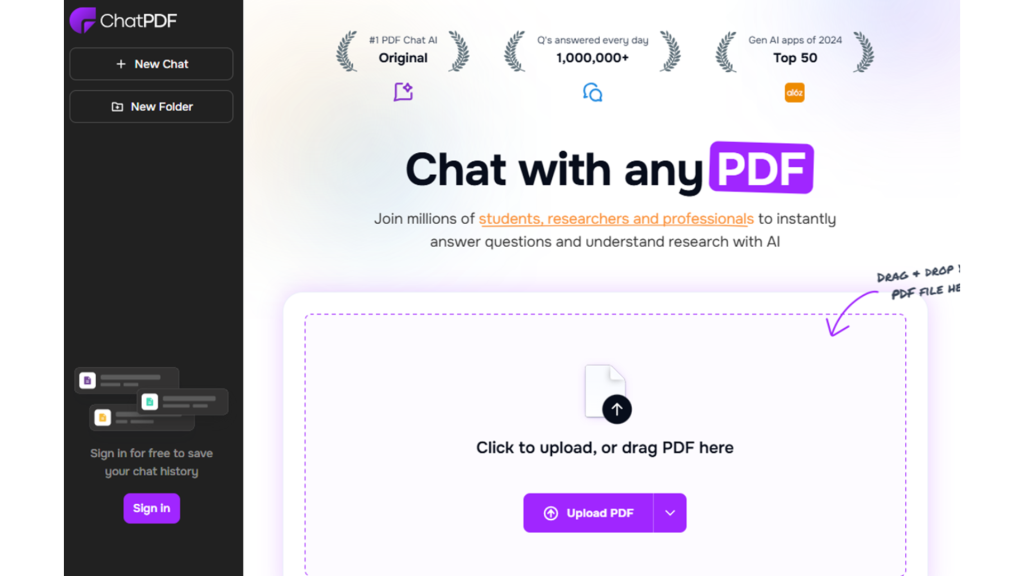
ChatPDF is perfect for those times when you need to quickly understand a dense academic paper.
This AI tool can:
- Extract text from PDF files.
- Summarize content.
- Answer questions about the paper’s content.
- Translate languages if needed.
Instead of manually going through an entire document, ChatPDF helps you find the key information you need, fast.
Why it’s useful: Saves time by summarizing and answering questions about PDF files, helping you focus on the most important points.
Additional Tips for Using AI Tools
AI tools are amazing, but to get the most out of them, you need to know how to use them effectively.
Here are some additional tips:
a. Combine multiple tools: Each tool has its strengths. For example, use Consensus or Semantic Scholar to find papers, Connected Papers to visualize connections, and SciSpace or Jenni to write and format your manuscript.
b. Keep track of your sources: While AI tools make finding and summarizing papers easy, always ensure you accurately cite the sources you use.
c. Check for accuracy: Although AI tools are powerful, they’re far from perfect. Always verify the information they provide, especially when summarizing or analyzing complex studies.
d. Use free versions wisely: Many of these tools offer free versions with limited features. Start with those and decide if upgrading to a paid version is worth it for your research needs.
e. Stay organized: Tools like ClioVis are great for managing your research. Use them to create categories, timelines, or visual maps to keep track of your findings and ideas.
Final Thoughts
The aforementioned AI tools are game-changers for every researcher, especially postgraduate students. They simplify complex tasks, save time, and let you focus on what matters most—your research.
Whether you’re just starting your postgraduate journey or in the final stages of writing, these tools can make the process smoother and more enjoyable.
So, why not give them a try?
Let AI take some of the workload off your shoulders, and watch your research progress faster than ever before. With the right combination of these tools, you’ll be well-equipped to tackle any research challenge that comes your way.
Happy researching!