Martial arts are not only about strength and speed, but also about precision, timing, balance, and technique.
In traditional training, these elements are usually taught through observation, repetition, and guidance from experienced instructors.
While this method has been effective for generations, it can sometimes be difficult to measure and analyze movement in a consistent and objective way.
With the advancement of technology, new tools are now available to support the study of human movement.
One of the most promising technologies is motion capture, also known as MoCap. This technology allows us to record human movement and convert it into digital data that can be analyzed and visualized.
In this article, we will explore how MoCap can be applied in martial arts studies, especially in Silat, and how it can support training, research, and performance improvement.
What is Motion Capture (MoCap)?
MoCap is a technology used to record human movement and translate it into digital form. This allows movements to be studied in detail using visual and numerical data.
The recorded motion can be replayed, analyzed, and compared over time, which makes it very useful for understanding complex physical activities.
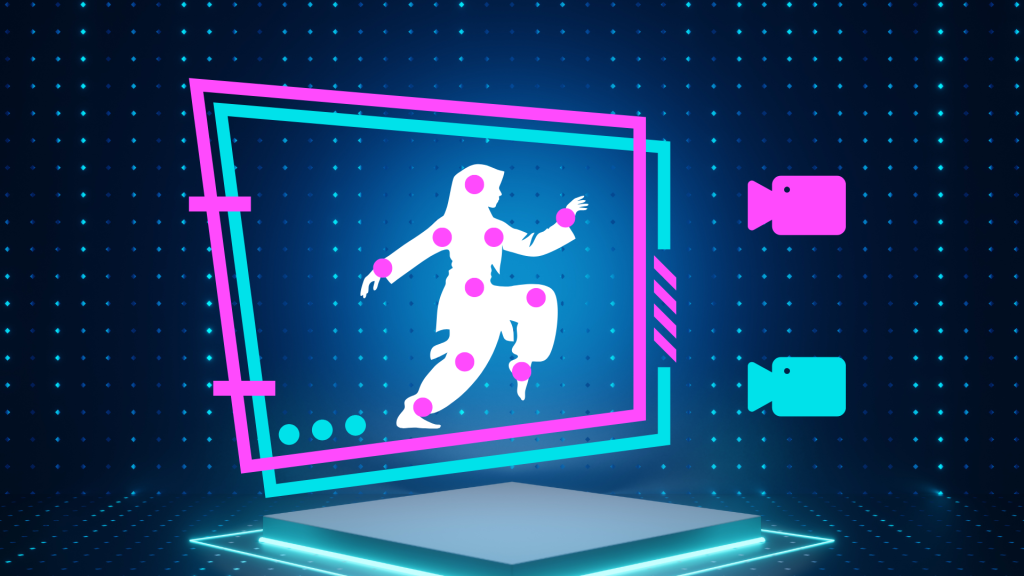
There are generally two types of MoCap systems. Marker-based systems require sensors or markers to be attached to the body, while markerless systems use cameras and software to track movement without any physical attachments.
In martial arts contexts, markerless MoCap is often more practical because it allows practitioners to move naturally without restrictions.
Interested to learn more about MoCap? [Read more here]
Why Use MoCap in Martial Arts?
Traditional martial arts training depends heavily on observation and instructor feedback. While this approach is valuable, it can be subjective and may vary between instructors.
MoCap provides a way to support this process by offering objective data about movement.
By using MoCap, practitioners and researchers can better understand how techniques are performed. It becomes possible to examine body posture, movement timing, and coordination in a more detailed way. This helps improve accuracy, consistency, and overall performance.
MoCap also allows practitioners to track their progress over time. Instead of relying only on feeling or memory, they can see actual changes in their movement patterns. This makes training more structured and measurable.
Application in Silat Studies
Silat is a traditional Malay martial art that involves complex and dynamic movements. Many techniques require precise coordination between the hands, body, and lower limbs.
Because of this complexity, it can be challenging to analyze and document Silat techniques using traditional methods alone.
MoCap provides a way to study these movements more systematically. By recording techniques in digital form, researchers and coaches can break down each movement into smaller components.
This makes it easier to understand how a technique is executed and how it can be improved.
In addition, MoCap helps preserve traditional knowledge by creating digital records of movement. This is important for ensuring that techniques can be studied and passed on accurately to future generations.
One practical example of MoCap application in martial arts can be seen in studies involving Silat Cekak Malaysia using platforms such as Cekak Visual 3D.
This platform is a markerless MoCap system developed to analyze martial arts performance in real training environments.
In these studies, practitioners perform selected techniques while their movements are recorded and analyzed in three dimensions. This allows researchers to observe how the body moves throughout each phase of a technique. For example, during a defensive movement, the system can show how the body shifts to maintain balance and how the hands coordinate with the rest of the body.
Interested to learn more about Cekak Visual 3D? [Read more here]
The use of Cekak Visual 3D also supports coaching and training. Practitioners are able to review their own movements and compare them with expected techniques.
This makes feedback more visual and easier to understand. Instead of relying only on verbal instructions, practitioners can clearly see where adjustments are needed.
From a research perspective, MoCap enables more objective analysis of Silat techniques. Researchers can compare movements between different practitioners and study how skill levels influence performance.
This helps build a more scientific understanding of martial arts, while still respecting its traditional foundation.
Challenges in Using MoCap
Although MoCap offers many benefits, there are still some challenges to consider. Some systems can be expensive and require technical expertise to operate.
Marker-based systems may also interfere with natural movement, which is not ideal for martial arts training.
In addition, setting up MoCap in real training environments can be challenging if the system is not designed for flexibility.
This is why the development of markerless systems is important, as they are more adaptable and easier to use in practical settings.
The Role of Markerless MoCap
Markerless MoCap systems are becoming increasingly popular because they allow movement to be captured without the need for sensors or markers.
This makes them more suitable for real-world applications, including martial arts training.
With markerless systems, practitioners can train as usual while their movements are recorded in the background.
This reduces disruption and allows for more natural performance. It also makes the technology more accessible to coaches, educators, and researchers who may not have access to specialized laboratories.
Platforms such as Cekak Visual 3D demonstrate how markerless MoCap can be applied effectively in martial arts, providing both practical and research benefits.
The Future of MoCap in Martial Arts
The future of MoCap in martial arts is promising. As technology continues to improve, we can expect more advanced tools that provide real-time feedback and deeper analysis.
Integration with artificial intelligence may also allow automatic detection of movement patterns and performance evaluation.
For martial arts like Silat, this opens new opportunities to combine traditional knowledge with modern technology.
This combination can enhance training, support research, and ensure that valuable techniques are preserved and understood more clearly.
Conclusion
MoCap is not meant to replace traditional martial arts training, but rather to support and enhance it.
By providing objective data and visual insights, it helps practitioners and researchers better understand human movement.
In the context of Silat, MoCap offers a powerful way to analyze techniques, improve performance, and preserve knowledge.
With platforms like Cekak Visual 3D, it is now possible to bring together tradition and technology in a meaningful and practical way.
As the field continues to grow, the integration of MoCap into martial arts studies will play an important role in shaping the future of training, research, and education.